5G wireless network operators are finding the need to increase base station signal density and flexibility.
With rapidly rising consumer demand for better latency and bandwidth, 5G bearer networks provide a reliable high-speed wireless connection for users. Scaling into 5G has forced network architects to move processing elements into a centralized unit closer to the core, while a distribution unit (formerly the baseband unit) is placed closer to the user in the active antenna unit.
This splits the network into front, middle, and backhaul links – each with its own prioritized specs and features. Allowing the network operator to focus on latency and bandwidth between user/antenna and the DU (where it is needed most), while the rest of the network is focused on maximizing efficiency per fiber bandwidth, security, and reliability.
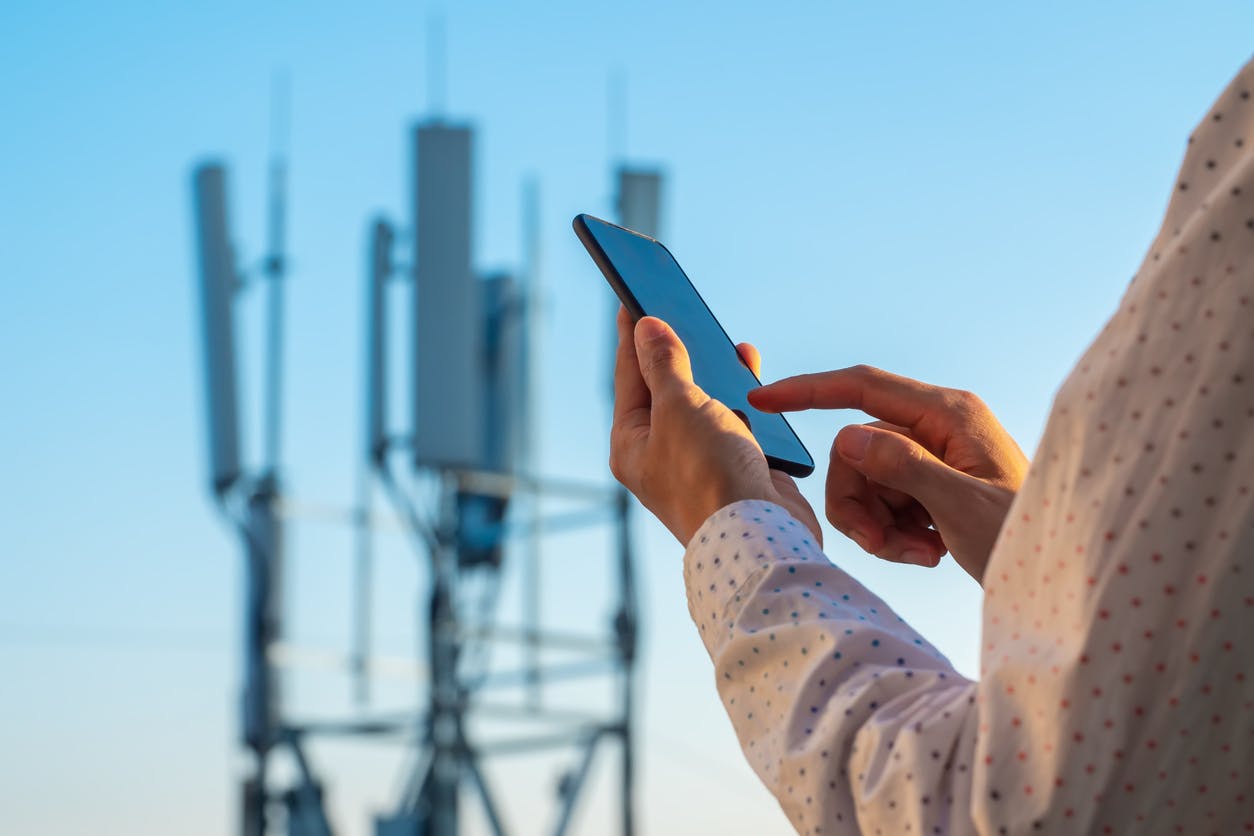
Creating 5G wireless supporting fronthaul fiber links
The 5G network transmission tightly controls both bandwidth and latency, so the 25Gbps eCPRI interface is ideal. In 5G front-haul network construction, fiber direct connection will be the main method of transmission. WDM is then used to increase the capacity of the connection, while OTN/SPN is used to increase its power.
Compared with fiber connectivity through other network devices, direct fiber connection is relatively simple to maintain but will consume more resources. As an alternative, WDM connection, although more expensive, is a more scalable supplementary solution to fiber direct.
Common solutions used in x-haul fiber network links.
| Form Type | Data Rate | Wavelength | Transmission Distance | Transmitter & Receiver | Modulation Format |
|---|---|---|---|---|---|
| SFP28 | 25Gbit/s | 850nm | 70~100m | VCSEL+PIN | NRZ |
| SFP28 | 25Gbit/s | 1310nm | 300m | FP/DFB+PIN | NRZ |
| SFP28 | 25Gbit/s | 1310nm | 300m | FP/DFB+PIN | NRZ |
| SFP28 | 25Gbit/s | 1310nm | 10km | DFB+PIN | NRZ |
| SFP28 BiDi | 25Gbit/s | 1270/1330nm | 10/15/20km | DFB+PIN/APD | NRZ/PAM4 |
| SFP28 | 25Gbit/s | CWDM | 10km | DFB+PIN | NRZ |
| Tunable SFP28 | 25Gbit/s | DWDM | 10/20km | EML+PIN | NRZ |
| QSFP28 | 100Gbit/s | 850nm | 70~100m | VCSELs+PINs | NRZ |
| QSFP28 | 100Gbit/s | 4WDM-10 | 10km | DFBs+PINs | NRZ |
| QSFP28 | 100Gbit/s | 1310nm | 10km | EML+PIN | PAM4/DMT |
| QSFP28 BiDi | 100Gbit/s | CWDM4 | 10km | DFBs+PINs | NRZ |
Mastering network traffic in mid/backhaul
Since 5G backhaul and mid-haul networks are both about managing traffic at various places in the network, there are many ways to transmit data, including via IPRAN (Internet Protocol Radio Access Network), PTN, and OTN.
The packet-enhanced OTN equipment with routing and forwarding functions is applied for the 5G mid-haul transmission. 5G backhauling benefits from the Border Gateway Protocol, which is the current protocol for routing and forwarding between IP routers.
To meet the demand for large capacity and network slicing of 5G, IPRAN introduces high-speed interface technologies. Another way to achieve physical isolation would be to use FlexE (flexible Ethernet), alleviating many problems associated with 5G transmissions.
End-to-end packet-enhanced OTN network devices are more commonly for mid-haul and back-haul transmission in 5G. This system handles high data rates and is easy to maintain, ultimately helping avoid interoperability issues.

The future of 5G fiber network deployments
New 5G capable optical module technologies and solutions are currently being developed to bridge fiber connections further and through harsher environments. The scaling demand for 5G services and the development of networks to support them are rapidly leading to even more cost-effective solutions.
With AddOn, maximizing performance & optimizing cost has never been easier. Gain full in-environment testing with thousands of OEM switches, along with our inventory always stocked and shipped in the U.S. and U.K.